
2021 community profile
Lower Mount Royal housing and community history.
A dated look at population, households, housing types and building eras—useful background for understanding how the community has evolved.
Historical community snapshot
Lower Mount Royal by the numbers.
These dated figures come from The City of Calgary, 2021 Census Community Profile: Lower Mount Royal. They add historical context to the community guide; current homes and market conditions are shown separately.
Source: The City of Calgary, 2021 Census Community Profile: Lower Mount Royal. Values are Census observations and may not total exactly because of rounding or source disclosure controls. Open the source ↗
Households and mobility
A community snapshot with the reference year attached.
The profile counted 2,990 people in private households across 2,010 households, with an average household size of 1.5 people.
6% of the population was age 14 or younger, 8% was age 65 or older, 26% were immigrants. These figures describe Lower Mount Royal at the 2021 Census reference date and should not be read as a prediction of who will buy a particular home.
Across 2,010 private households, median total household income before tax was $57,600 in 2020; this is demographic context, not a measure of current purchasing power or home value.
1,960 residents aged five and older had moved within the prior five years (67%); that is household-mobility context rather than a proxy for real estate turnover.
730 members of the employed labour force used driver – car, truck or van as their main commute mode (61%), while 565 reported the most common duration, 15 to 29 minutes (47%).
Occupied dwelling structure
The housing mix in Lower Mount Royal.
This is the historical housing mix reported for the community. Use the current listings page to see what is available now.
Period of construction
When the occupied housing stock was built.
Construction era can point buyers toward useful inspection questions, but the renovation history and effective age of the individual home matter more.
Source: The City of Calgary, 2021 Census Community Profile: Lower Mount Royal. Values are Census observations and may not total exactly because of rounding or source disclosure controls.
Community evidence brief
A fuller Lower Mount Royal foundation.
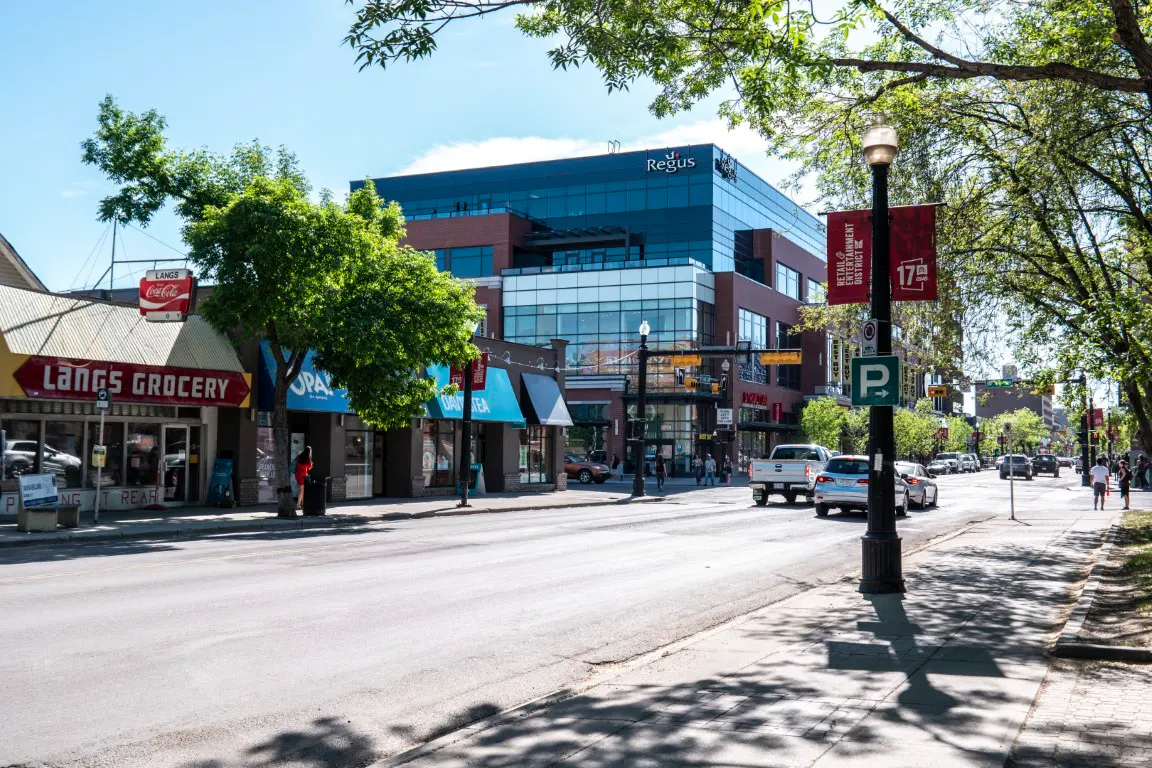
Lower Mount Royal is an inner-city Calgary market shaped primarily by apartment and condominium living near the 17 Avenue corridor, with building quality and governance often mattering as much as the unit itself. The City of Calgary's 2021 Census profile counted 2,990 people in private households and 2,010 private households in the community. Apartments in buildings under five storeys represented 71% of occupied private dwellings, while apartments in taller buildings represented another 21%. The largest historical construction cohort was 1961 to 1980, which makes reserve planning, insurance, building-envelope history, mechanical systems, parking, storage, bylaws and special-assessment exposure important comparison points. Dusko Sremac leads the client relationship, with Michael Gloria featured as the designated Real Estate Partners community partner. Current listings should be compared building by building and unit by unit rather than against a broad neighbourhood average.
How to read this brief
Exact community-profile evidence is used for this guide. Historical Census context, current listing status and address-specific property evidence remain separate layers.
Historical community evidence, current listing status and address-specific property records remain separate layers throughout the guide.
See sources and methodology →Define the geography before describing the property.
Boundary discipline
- Confirm the exact Lower Mount Royal boundary and the listing's community field against the current municipal map or address record before publication.
- Describe nearby services as nearby rather than inside the community unless the mapped boundary and current source support that wording.
Development and housing history
- 37% of occupied private dwellings were reported in the 1961 to 1980 construction cohort; the Census figure does not establish the age of a current listing.
- 18% of occupied private dwellings were reported in the 1960 or before construction cohort; the Census figure does not establish the age of a current listing.
- 15% of occupied private dwellings were reported in the 1981 to 1990 construction cohort; the Census figure does not establish the age of a current listing.
- 12% of occupied private dwellings were reported in the 2001 to 2010 construction cohort; the Census figure does not establish the age of a current listing.
Different contexts inside the community
- Compare interior streets with route-, park-, amenity-, employment- or edge-adjacent locations where those conditions exist at the exact address.
- Separate site and immediate-block conditions from a broad community label; view, noise, access, privacy, construction and land-use context can change within a neighbourhood.
Explore the guides
Choose your next step in Lower Mount Royal.
Compare the community, the type of home and the property-specific details in the order that makes sense for your move.
01
Translate data into questions
Turn structure type and construction period into a property-specific comparison and inspection plan.
Explore →02Building guide
The neighbourhood brings the search into focus; the building and corporation determine the ownership file.
Explore →03Add daily-life context
Check current parks, services, schools and routes separately from the fixed Census reference date.
Explore →Quick answers
What buyers and sellers ask about Lower Mount Royal.
Start with the practical questions, then open the detailed guide that matches the property or decision in front of you.
What evidence supports the Lower Mount Royal community profile?
The guide uses the exact named 2021 official profile for historical community context. It does not treat that profile as current inventory, price or evidence about an individual property.
What does the Lower Mount Royal housing profile show?
1,435 occupied private dwellings were reported as apartments in buildings with fewer than five storeys in the 2021 Census profile (71%); 420 apartments in buildings with more than five storeys represented another 21%.
When was much of the occupied Lower Mount Royal housing stock built?
Lower Mount Royal’s largest reported construction cohort was 1961 to 1980 with 755 occupied private dwellings (37%), followed by 1960 or before with 355 (18%).
Does community data describe every Lower Mount Royal resident or home?
No. Historical aggregate data describes the named geography at its reference date; it cannot establish a person's circumstances or a property's current condition, price or suitability.
Official referencesGovernment and official records used for local context3 references +
012021 Census Community Profile: Lower Mount RoyalThe City of Calgary · accessed 2026-08-26
Census population, household, tenure, dwelling-form and construction-period context
Open official source ↗02Find land titles, documents or plansGovernment of Alberta · accessed 2026-08-26Title, registered-interest and plan due diligence
Open official source ↗03Property ResearchThe City of Calgary · accessed 2026-08-26Address-level permits, land use and planning records
Open official source ↗Official records provide dated community context. Current listing status and conclusions about one property still require the applicable live record and property documents.